
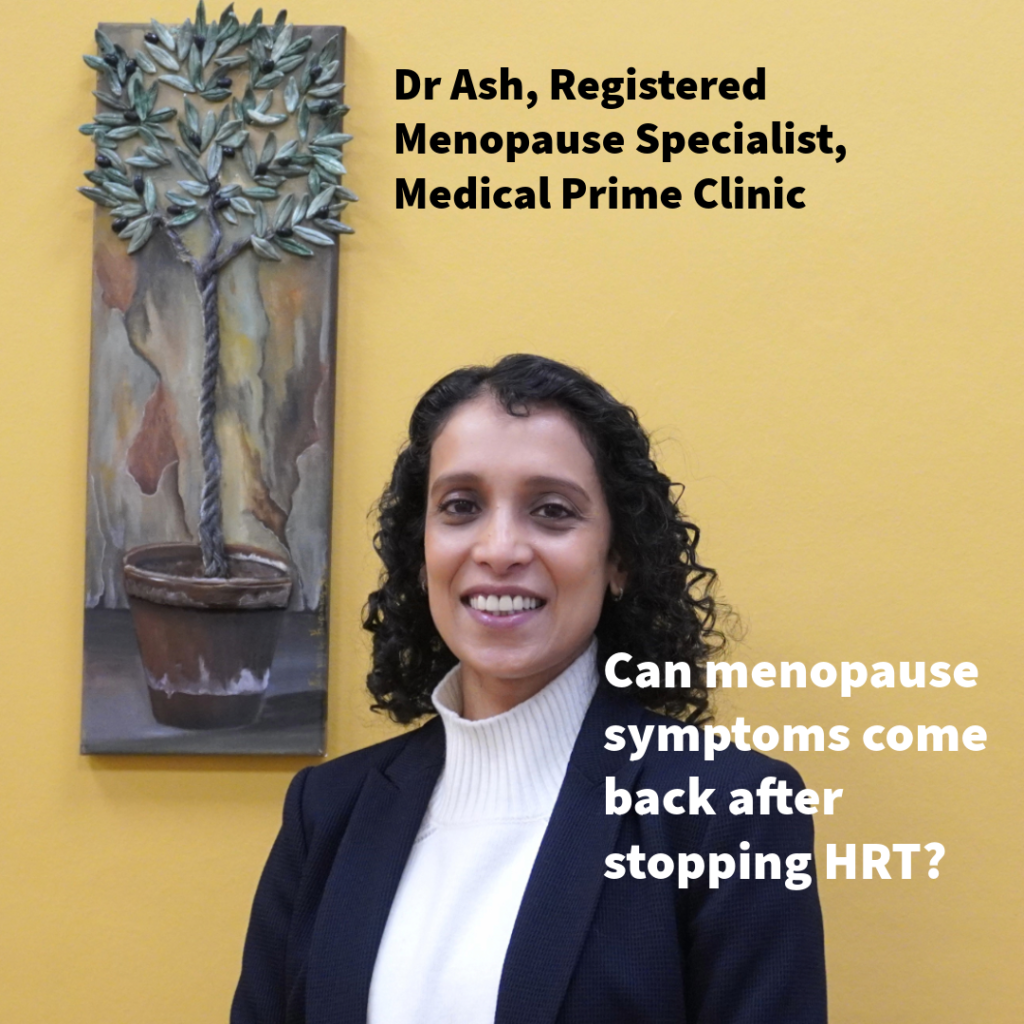
Can menopause symptoms come back after stopping HRT? Dr Ashlesha Dhairyawn, Registered British Menopause Society Menopause Specialist.
You stop HRT and, for a while, nothing much seems to change. Then the hot flushes begin to creep back. Sleep becomes more unsettled, your joints feel achier, or that familiar anxiety starts to return.
It is understandable to wonder whether stopping HRT has somehow unsettled your hormones or caused you to go backwards. Usually, that is not what is happening.
HRT helps control symptoms caused by the hormonal changes of menopause. If those changes are still affecting you when treatment stops, some of the symptoms can return. That does not mean you have damaged your body or that stopping was the wrong decision.
Why have my menopause symptoms come back?
During perimenopause and menopause, hormone levels, particularly oestrogen, become more erratic and eventually decline. HRT replaces some of those hormones, which is why symptoms such as hot flushes, night sweats, poor sleep, low mood, anxiety and joint aches may become much less noticeable while you are taking it.
When treatment stops, those symptoms can reappear if your body is still sensitive to the hormonal changes of menopause.
There is no single pattern. Some women stop HRT and feel completely well. Others notice that familiar symptoms return gradually, perhaps with poorer sleep first and hot flushes or mood changes becoming more obvious later. For some, the return is much quicker.
Vaginal and urinary symptoms can behave a little differently. Dryness, soreness, discomfort during sex or urinary symptoms are linked to the effect of lower oestrogen on the vaginal and urinary tissues. These symptoms may persist or become more noticeable over time rather than fading in the same way that hot flushes sometimes do.
If these are your main symptoms, local vaginal oestrogen may be an option even if you do not want to restart systemic HRT.
How long does it take to adjust after stopping HRT?
There is no standard timeframe.
Some women feel fine after stopping. Others notice symptoms for a few weeks or months before things settle again. For some, symptoms continue because they would still naturally be experiencing menopause symptoms at that stage of life even without HRT.
Hot flushes and night sweats can continue for years in some women, so stopping HRT does not necessarily mean there will be a short adjustment period followed by everything disappearing.
HRT can be reduced gradually or stopped altogether. Reducing the dose more slowly may make the return of symptoms feel less abrupt in the short term, although it does not appear to change whether symptoms return in the longer term.
It is important not to change individual parts of your HRT regimen on your own. If you have a womb and use systemic oestrogen, the progestogen in your treatment is there to protect the lining of the womb.
Do I need my hormone levels checked?
For most women, no.
If you are over 45 and your symptoms and menstrual history fit with perimenopause or menopause, hormone blood tests are usually not very helpful. Levels can fluctuate considerably during perimenopause, so a single result often tells us less than the pattern of your symptoms.
What matters more is whether these are the same symptoms you had before HRT, when they returned and how much they are affecting you now.
If you are experiencing something quite different, it is worth looking beyond menopause too. Fatigue or brain fog, for example, can still be hormone related, but thyroid problems, iron deficiency, sleep problems and other conditions can produce very similar symptoms.
There is also an important difference if you experienced menopause before the age of 45 or have premature ovarian insufficiency. In that situation, HRT may have been prescribed for bone and cardiovascular protection as well as symptom control, so stopping treatment should be discussed properly with your clinician.
Should I go back on HRT?
Not necessarily, but it is reasonable to review the situation if symptoms are beginning to affect how you function.
If poor sleep, hot flushes, anxiety, low mood or other symptoms are interfering with daily life, restarting HRT may be one option. It does not always mean going back to exactly the same treatment. A different dose or preparation may suit you better, or a particular symptom such as vaginal dryness may be treated separately.
Non-hormonal treatments can also be useful for some women.
The right choice depends on why you stopped HRT, how troublesome the symptoms are now, your medical history and whether anything has changed since your last prescription.
If you still have old HRT at home, do not simply restart it without checking that the dose and preparation are still appropriate for you.
Could the symptoms be something other than menopause?
Yes, and this is particularly important if the symptoms are new rather than simply a return of what you experienced before.
Tiredness, palpitations, brain fog, anxiety, poor sleep and aching joints are all common during menopause, but none of them is specific to menopause.
Thyroid disease can cause fatigue and palpitations. Iron deficiency can leave you exhausted. Sleep apnoea can affect sleep and concentration, while stress can make several symptoms feel more intense.
Sometimes menopause is part of the explanation rather than the whole explanation.
If your symptoms have changed significantly, are getting worse quickly or simply do not feel like the symptoms you had before, speak to your GP or menopause specialist.
When should I ask for a review?
You do not need to wait until symptoms become overwhelming. If they are affecting your sleep, work, relationships or general quality of life, that is enough reason to have another conversation about treatment.
It is also worth seeking advice if you stopped HRT because of a medical concern and are thinking about restarting it, if you experienced menopause before 45, or if you are unsure how to reduce your treatment safely.
Some symptoms should not simply be put down to menopause. Unexplained weight loss, persistent fever, chest pain, fainting, significant breathlessness or new neurological symptoms need medical assessment.
Unexpected bleeding after menopause should also be checked.
What if stopping HRT simply hasn’t worked for me?
If familiar symptoms have returned and are affecting everyday life, it may be worth reviewing the plan rather than assuming you simply need to wait them out.
Some women remain well after stopping HRT. Others find that symptoms return enough to affect sleep, mood, concentration or general wellbeing. That does not mean stopping was a mistake. It can simply show that menopause symptoms are still affecting you.
Depending on your symptoms, medical history and preferences, the next step might be restarting HRT, adjusting the dose or preparation, treating a particular symptom separately or considering a non-hormonal option.
A review with your GP or menopause specialist can help you decide what is appropriate for you now.