
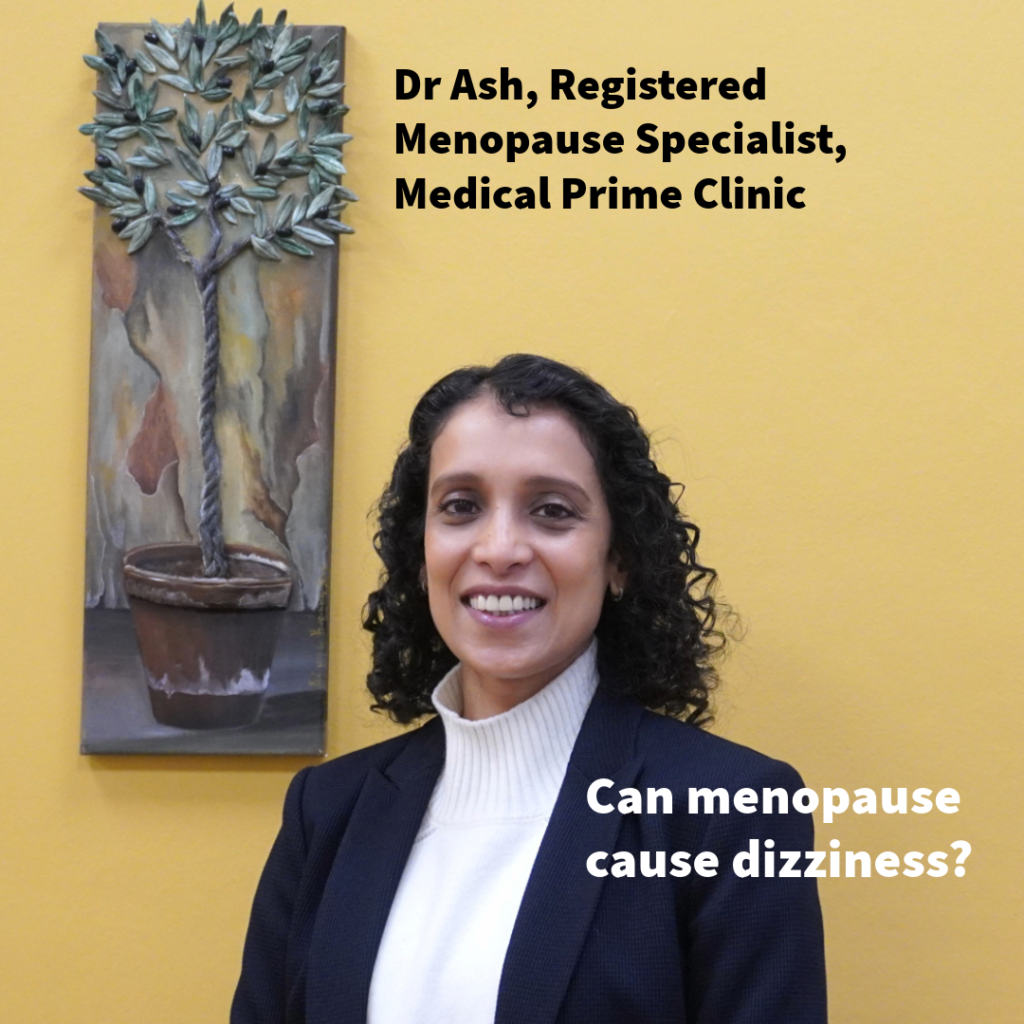
Can menopause cause dizziness? Dr Ashlesha Dhairyawn, Registered British Menopause Society Menopause Specialist.
You stand up and suddenly feel lightheaded. At other times, the room seems to move, your balance feels unreliable or you find yourself reaching for something steady. If this starts during perimenopause or menopause, it is natural to wonder whether changing hormones are responsible.
Some women do notice dizziness, lightheadedness or feeling off balance during this stage of life, particularly alongside hot flushes, poor sleep, anxiety or fatigue. Hormonal changes may be part of the picture.
But dizziness has many possible causes, so it should not automatically be put down to menopause, especially if it keeps happening, is getting worse or feels different from anything you have experienced before.
What does dizziness during menopause actually feel like?
“Dizziness” can mean several different things, and the way it feels can give useful clues about what might be causing it.
Lightheadedness is the feeling that you might faint. You may feel weak or clammy, your vision might dim, and it can be worse when you stand up quickly.
Vertigo is different. With vertigo, you usually feel as though you or the room is moving, spinning or tilting, even though you are still. This is often linked to the balance system in the inner ear.
Feeling off balance is more of an unsteady sensation when you are standing or walking. You may feel as though you are veering to one side or cannot quite trust your footing.
It is also worth noticing what brings the dizziness on. Does it happen when you stand up, turn your head or roll over in bed? Is it more likely after a hot flush, when you have not eaten for a while or when you are particularly tired?
How long it lasts matters too. A few seconds of lightheadedness after standing can point towards a very different cause from spinning that continues for much longer.
How might perimenopause or menopause contribute?
There probably is not one single explanation for dizziness during menopause. Hormonal changes may play a part, but dizziness can also be linked to other symptoms that become more common or troublesome around this time, such as hot flushes, poor sleep, anxiety and migraine.
A night of broken sleep because of hot flushes or night sweats can leave you exhausted the next day. During a hot flush, sweating, a racing heartbeat or anxiety may make you feel lightheaded. Stress and poor sleep can add another layer.
Anxiety can also cause dizziness if it changes the way you breathe. Breathing more quickly or deeply than your body needs can lead to lightheadedness, tingling or a feeling of unreality.
Then there are everyday factors such as dehydration, going too long without eating, low blood pressure, alcohol, caffeine or medication side effects.
Migraine is another possibility. Hormonal changes can affect migraine patterns during perimenopause, and some people experience vertigo or imbalance as part of migraine even when headache is not the main symptom.
This is why the pattern matters more than simply asking whether menopause can cause dizziness. Hormonal changes may contribute, but they do not explain every dizzy spell.
What else could be causing it?
There are many causes of dizziness that have nothing to do with menopause.
Inner ear problems are a common reason for vertigo. Benign paroxysmal positional vertigo, or BPPV, typically causes brief spinning when you move your head, roll over in bed, look upwards or bend down.
Other inner ear conditions can cause longer lasting vertigo, nausea and problems with balance. Hearing loss, tinnitus or pressure in the ear alongside dizziness can also be useful clues.
Lightheadedness when you stand may be related to a fall in blood pressure. Dehydration, iron deficiency or anaemia, migraine, anxiety, medicines, thyroid problems, blood pressure changes, heart rhythm problems and vision problems can all cause dizziness too.
A medical assessment may involve looking at when the symptoms happen, checking your blood pressure sitting and standing, reviewing your medicines, examining your ears and balance, or arranging blood tests if there is a reason to do so.
If dizziness is persistent, it is better to investigate the pattern than to assume hormones are responsible.
Can HRT help with dizziness?
HRT is not a specific treatment for unexplained dizziness.
Some women may find that dizziness improves when other menopause symptoms are treated. If hot flushes and night sweats settle, for example, better sleep and less exhaustion may reduce episodes of lightheadedness.
That does not necessarily mean hormones were the only cause.
Dizziness can also begin after starting HRT or changing the dose or preparation. If the timing suggests a connection, discuss it with the clinician who prescribed your treatment rather than adjusting or stopping HRT on your own.
Whether HRT is appropriate should be based on your overall menopause symptoms, medical history, possible benefits and individual risks. It would not usually be prescribed purely to treat dizziness without understanding what is causing it.
What should I do when dizziness happens?
If you feel dizzy, sit or lie down somewhere safe until the sensation passes. This is particularly important if you feel as though you might faint or your balance is unreliable.
Get up slowly afterwards, especially if standing seems to bring the dizziness on. If needed, sit on the edge of the bed or chair for a moment before standing fully.
Avoid driving, climbing ladders or using machinery while you are dizzy. Drinking some water may help if you have been sweating or have not had enough fluids, and eating may help if you have gone a long time without food.
A simple symptom diary can also be useful. Note what the dizziness felt like, how long it lasted and what you were doing when it started. It is worth recording other symptoms such as headache, nausea, hearing changes, palpitations or anxiety, as well as any recent medication or HRT changes.
If you still have periods, you may also notice that symptoms follow a particular pattern in your cycle.
When should I speak to a doctor?
Arrange a GP appointment if the dizziness keeps returning, is becoming more severe, does not go away or is starting to affect walking, work or normal daily activities.
It is also worth getting checked if it started after a medication change, occurs alongside palpitations, headaches, nausea or vomiting, or is accompanied by hearing loss, tinnitus or pressure in one ear.
Seek urgent medical help if dizziness suddenly occurs with symptoms such as weakness or numbness in the face, arm or leg, difficulty speaking, a new vision change, a severe sudden headache, chest pain, significant breathlessness or loss of consciousness.
New difficulty walking or standing, sudden hearing loss, repeated vomiting or being unable to keep fluids down also needs urgent assessment.
These symptoms can occasionally point to a stroke, heart problem or another condition that needs prompt treatment, so they should not be assumed to be part of menopause.
Dizziness during menopause is worth understanding properly
Dizziness can appear during perimenopause or menopause, and hormonal changes may contribute. Poor sleep, hot flushes, anxiety, migraine, dehydration and changes in blood pressure can all overlap during this stage of life.
The useful question is not simply whether menopause can cause dizziness, but what your dizziness actually feels like, when it happens and what comes with it.
If it is persistent, keeps returning or is affecting your confidence or daily life, arrange a medical review. Understanding the pattern usually gives much more useful information than assuming hormones are the cause.